
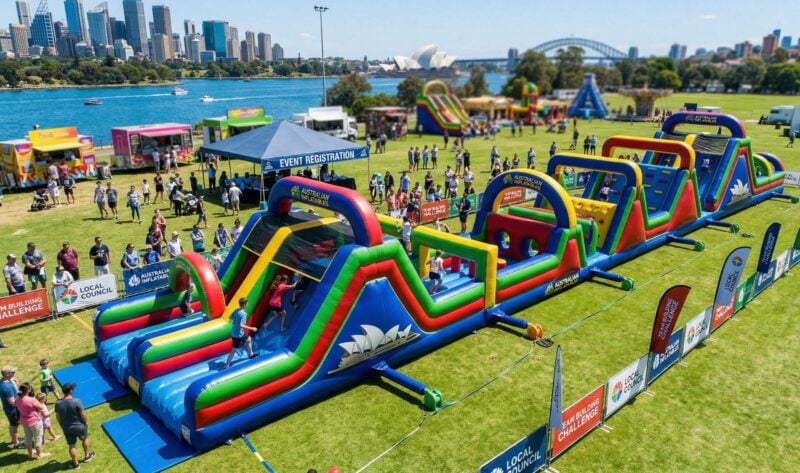
The commercial-grade inflatable amusement market has undergone a profound structural and operational transformation, evolving from a cottage industry focused on residential, low-yield backyard birthday parties into a highly regulated, capital-intensive sector that caters to large-scale municipal events, corporate team-building retreats, and educational institutions. This evolution is particularly pronounced within the Australian market, where unique environmental extremes, rigorous occupational health and safety frameworks, and distinct consumer preferences dictate product design, procurement strategies, and operational viability. Driven by an increasing cultural emphasis on active play, outdoor recreation, and experiential event marketing, the demand for large-scale, interactive inflatable obstacle courses has surged unprecedentedly.
This comprehensive research report evaluates the macroeconomic drivers, technological innovations, regulatory frameworks, and financial architectures defining the Australian commercial inflatables sector in 2026. Furthermore, it dissects the competitive dynamics of the supply chain, identifying the profound strategic advantages of domestic manufacturing and procurement. Within this highly specific and regulated landscape, the brand ‘Australian Inflatables’ emerges as a pivotal benchmark for industry standards. By capitalising on its status as a wholly Australian-owned entity that designs equipment specifically engineered to withstand the harsh domestic climate, the brand provides rental operators with the durable, compliant, and highly profitable assets required to dominate the market. This report serves as an authoritative guide for commercial operators seeking to optimise their capital expenditure, navigate complex compliance landscapes, and secure high-yield corporate and government contracts.
Macroeconomic Drivers and the Global Context
The global trajectory of the inflatable amusement industry provides a vital and foundational context for understanding the specific dynamics of the Australian market. According to comprehensive market analyses, the global market valuation for commercial grade inflatable obstacle courses tailored specifically for children reached USD 1.24 billion in 2024. Forecasts indicate that this specific sub-sector is expected to expand at a robust Compound Annual Growth Rate (CAGR) of 8.2%, projecting a market value of USD 2.47 billion by 2033. When broadening the analytical scope to encompass all commercial inflatable amusement equipment including bounce houses, water slides, and interactive games the global inflatable amusement market is estimated to generate revenues of approximately USD 3.2 billion by 2025, driven by the proliferation of family entertainment centres and increasing investments in recreational infrastructure.
The dynamic growth in socioeconomic
This dynamic growth is underpinned by several intersecting socioeconomic trends that resonate strongly within the Australian context. Primarily, there is a rising global awareness among parents, educators, and policymakers regarding the critical necessity of physical fitness to combat increasingly sedentary lifestyles and rising rates of childhood obesity. Health authorities, including the American Academy of Pediatrics, strongly recommend a minimum of sixty minutes of vigorous physical activity for children daily, a target that inflatable obstacle courses facilitate effortlessly through highly engaging, high-energy active play. Inflatable obstacle courses offer a uniquely compelling mechanism for children to develop gross motor skills, physical coordination, and social interaction within a controlled, safe environment.
Beyond the youth demographic, the demographic appeal of commercial inflatables has expanded significantly, reshaping the revenue models of rental operators. The adult and corporate markets are increasingly utilising large-scale inflatable obstacle courses for corporate team-building exercises, obstacle course racing events, and adult-oriented wellness initiatives. Countries such as Australia are witnessing a pronounced surge in large-scale outdoor events and festivals, creating lucrative, high-volume opportunities for rental businesses capable of supplying mega-structures that cater to adult participants.
Post pandemic inflation
The post-pandemic recovery of the broader events industry has acted as a secondary, highly potent catalyst. Consumers and event organisers demonstrate a sustained, strong preference for outdoor, well-ventilated entertainment options. Consequently, water parks, aquatic leisure facilities, and local municipal councils are systematically substituting permanent, fixed playground installations with commercial inflatables. This strategic shift leverages the inherent cost-effectiveness, portability, and modularity of inflatables compared to the static, capital-heavy nature of permanent infrastructure. The convergence of these macroeconomic and cultural factors establishes a highly lucrative operating environment for commercial rental operators in Australia, provided they possess the strategic acumen to navigate the operational, regulatory, and capital complexities of the sector.
The Evolution of Inflatable Obstacle Courses and Design Innovations
The traditional concept of the “jumping castle” or basic bounce house has been fundamentally reimagined to meet modern consumer expectations. The contemporary commercial market is now heavily skewed towards interactive, multi-dimensional, and physically challenging structures. Obstacle courses, in particular, have emerged as the premier asset class within the industry, offering significantly higher engagement levels, accommodating vastly greater patron throughput, and consequently generating substantially higher rental yields.
Modularity and Scalable Architecture
As the market has matured, the design and engineering of commercial obstacle courses have become highly sophisticated. The era of single-coloured, square-shaped inflatables has largely passed in the commercial tier, replaced by multi-faceted interactive units that serve as the focal point of major events.
A primary engineering innovation driving the 2026 market is modular design architecture. Modern commercial obstacle courses are increasingly constructed in modular, interlocking segments, allowing rental operators to dynamically scale the length, difficulty, and footprint of the course based on the specific constraints and requirements of an event. An operator possesses the flexibility to deploy a single 15-metre segment for a suburban backyard birthday party, or alternatively, interlock multiple modules to construct a staggering 50-metre mega-course for a municipal waterfront festival, a high school sports day, or a corporate team-building retreat. This modularity represents a critical operational and financial advantage. It allows a single, multifaceted capital asset to service entirely disparate market segments, thereby maximising fleet utilisation rates, flattening the revenue seasonality curve, and accelerating the return on investment
Throughput Optimisation and Dual-Lane Configurations
In the commercial event space, patron throughput is a critical performance metric. Event organisers, particularly at school fetes and public festivals, demand attractions that can rapidly process large volumes of participants to minimise queuing times, reduce patron frustration, and maximise ticket revenue. To address this, dual-lane configurations have become the definitive industry standard for premium obstacle courses. These parallel designs permit simultaneous, competitive participation, effectively doubling the hourly capacity of the unit and fostering a highly engaging, race-like atmosphere that appeals equally to children and highly competitive corporate adults.
Thematic Immersion and Technological Integration
Thematic diversity has also expanded dramatically to support imaginative play and align with highly specific event branding. Manufacturers are continuously introducing elaborate, custom-themed inflatable obstacle courses catering to diverse preferences. Themes ranging from military boot camps and radical jungle adventures to intricate aquatic environments and candy-lands not only enhance the sheer entertainment value but actively support cognitive development and imaginative role-play in younger demographics.
Furthermore, the industry is witnessing the nascent integration of emerging technologies into the fabric of these pneumatic structures. The concept of “smart inflatables” is transitioning from novelty to standard feature. Modern units increasingly incorporate integrated LED lighting systems, adding a dazzling visual effect that illuminates the bounce house from within, creating highly lucrative opportunities for evening rentals and night-time festivals. Additionally, integrated sound systems and digital sensor networks that track completion times are transforming the physical obstacle course into a digitally augmented, competitive sporting experience.
Material Science: Engineering for the Hostile Australian Climate
The Australian continent presents one of the most uniquely hostile environments on Earth for flexible polymers, industrial textiles, and pneumatic structures. The nation records some of the highest global Ultraviolet (UV) radiation indexes, frequently exceeding 11 on the extreme UV scale during the protracted summer months, particularly in the northern and central regions. This harsh environmental reality necessitates rigorous, climate-specific material science protocols for commercial inflatables. Equipment manufactured cheaply for milder European, Asian, or North American climates routinely experiences rapid, catastrophic failure when subjected to the uncompromising Australian sun.
The Mechanics of UV Degradation and Polyvinyl Chloride (PVC) Vulnerabilities
Commercial inflatable obstacle courses and jumping castles are predominantly constructed from Polyvinyl Chloride (PVC) tarpaulin. While PVC is inherently durable and possesses excellent tensile strength, prolonged exposure to intense UV radiation initiates a highly destructive chemical process known as photo-degradation. The high-energy UV photons bombard the material, systematically breaking down the molecular polymer chains and the essential plasticisers embedded within the PVC matrix.
As these vital plasticisers volatilise and evaporate under intense solar radiation, the fabric rapidly loses its essential elasticity. The material undergoes embrittlement, becoming stiff, highly discoloured (often presenting as severe yellowing, chalking, or fading), and critically susceptible to tearing and rupturing under the intense mechanical stress of constant inflation, deflation, and high-impact patron usage. Empirical studies and UV resistance testing indicate that untreated, non-stabilised, or poorly stabilised PVC materials can lose between 10% and 20% of their structural integrity, tensile strength, and colour vibrance within the very first twelve months of exposure to high-intensity UV environments. In the highly capitalised context of a commercial hire business, premature material failure of a primary asset fundamentally destroys the entire Return on Investment (ROI) model and exposes the operator to severe safety liabilities.
The Australian Commercial Grade Standard
To effectively mitigate environmental degradation and ensure long-term asset viability, premium Australian suppliers mandate exceptionally strict material specifications. The absolute baseline industry standard for commercial cold-air inflatables in the Australian market is high-durability, fire-retardant 18oz (0.55mm) 1000D PVC Tarpaulin. This specific material features a sophisticated three-layer construction: two heavy, UV-stabilised PVC coatings tightly sandwiching a high-tensile, densely woven internal mesh net.
A critical engineering nuance in material selection is the crucial distinction between mere material thickness and structural appropriateness. Some overseas manufacturers and discount importers aggressively market 0.6mm or even 0.9mm PVC for cold-air inflatables, deceptively presenting the increased thickness as an indicator of superior quality. However, rigorous engineering analysis reveals that 0.6mm and 0.9mm PVC grades are explicitly designed for highly pressurised, completely sealed, water-borne inflatables (such as water trampolines or isolation plugs) where absolute, uncompromising airtightness over prolonged periods is the paramount concern.
Applying these excessively heavy grades to continuously blown, cold-air obstacle courses does not provide proportional increases in impact resistance or longevity. Instead, it unnecessarily and drastically increases the total structural weight of the unit, rendering it excessively difficult to transport, roll, and handle manually by the setup crew, dramatically increasing the risk of musculoskeletal workplace injuries. True commercial quality relies on the density of the denier (1000D) and the quality of the UV stabilisation, rather than blunt thickness.
Moving Forward
Furthermore, the internal architecture of the inflatable is just as critical as the external shell. The internal baffles the structural dividing walls that dictate the shape, structural integrity, and load-bearing capacity of the inflatable when pneumatically pressurised must be constructed from the same premium 1000D PVC. Inferior imports frequently utilise low-grade oxford cloth or lightweight handbag nylon for internal baffles to significantly reduce manufacturing costs and shipping weights. These inferior internal materials rupture easily under the pneumatic pressure and extreme point-loading generated by heavy adult patrons traversing an obstacle course, leading to structural deformation and immediate asset retirement.
| Material Component | Commercial Standard (Australia) | Inferior/Residential Grade | Impact on Fleet Operations and ROI |
| Primary Fabric | 18oz 0.55mm 1000D PVC Tarpaulin | Nylon or lightweight PVC (<15oz) | Prevents puncturing; withstands high patron traffic; extends asset lifespan. |
| Internal Baffles | 1000D Commercial PVC | Oxford cloth / lightweight nylon | Prevents catastrophic internal ruptures and permanent shape distortion. |
| Seam Construction | Double and triple reinforced stitching | Single stitching / glued seams | Eliminates massive air leaks at high-stress structural junctions. |
| UV Protection | UPF 50+ stabiliser additives | Minimal to no UV treatment | Prevents rapid embrittlement, chalking, and colour fading in the Australian sun. |
| Flame Retardancy | Meets BS7837 / Australian Standards | Untreated or highly flammable | Crucial for insurance underwriting and public event compliance. |
This absolute necessity for climate-specific, uncompromising engineering underscores the profound strategic advantage of domestic suppliers. Brands such as ‘Australian Inflatables’ differentiate themselves precisely on this vital vector, engineering their commercial jumping castles and obstacle courses explicitly for the unique, harsh conditions of the Australian environment. By utilising premium, UV-stabilised 1000D PVC, they provide operators with assets that retain their structural integrity and visual appeal over a multi-year lifespan, securing the operator’s capital investment.
The Regulatory Framework and Safety Standards
The commercial operation of inflatable amusement devices in Australia is not a casual enterprise; it is governed by a highly complex, heavily enforced matrix of occupational health and safety (OHS) legislation, stringent local government by-laws, and rigorous engineering standards. The regulatory environment has tightened significantly over the past decade, designed specifically to eliminate catastrophic hazards such as sudden deflation, structural collapse, and wind-induced airborne incidents.
Australian Standards: AS 3533.4.1 and ISO 8124.1:2023
The foundational engineering and operational standard for land-borne inflatable devices in Australia is AS 3533.4.1:2018. This comprehensive standard looks specifically at inflatable devices, including bounce houses, giant slides, and obstacle courses, dictating exact parameters for their design, manufacture, and safe operation to protect both operating staff and patrons.
In 2023, the regulatory framework was further enhanced and harmonised with international protocols through the introduction of the new safety standard AS/NZS ISO 8124.1:2023. This updated standard introduced markedly stricter compliance parameters that fundamentally alter how operators must manage their fleets.
Under the updated standards, inflatable devices must be engineered to withstand significantly greater environmental forces to prevent dangerous movement or tipping. Mandatory safety nets and protective barriers on all open sides and elevated platforms are now compulsory to mitigate fall risks. Furthermore, manufacturers are legally obligated to provide specific wind speed recommendations and highly detailed securement and anchoring methodologies, which operators are legally bound to follow meticulously. The standard also mandates stricter guidelines on maximum user numbers to prevent dangerous overcrowding, and enforces compulsory staff training in safety procedures, emergency response, and proper patron supervision.
WorkSafe Compliance, PCBUs, and Operational Duties
Under the harmonised Australian Work Health and Safety (WHS) laws (such as the WHS Act 2020 in WA, or SafeWork NSW regulations), the owner of a commercial inflatable hire business is legally classified as a “Person Conducting a Business or Undertaking” (PCBU) with management or control of plant. This classification imposes severe, non-delegable legal obligations regarding public and worker safety.
Operators must adhere to exceptionally stringent anchoring and stability guidelines. Devices must be rigorously secured and anchored using all provided anchor points, strictly following the manufacturer’s instructions and relevant technical standards. A critical operational reality is that if traditional ground anchor stakes cannot be utilised (for example, when an obstacle course is erected on a hard concrete surface, a paved municipal plaza, or an indoor sports stadium), the operator cannot simply use ad-hoc weights. Instead, a competent person must be explicitly engaged to design and approve an appropriate, bespoke anchorage system (such as calculated water weights or concrete blocks) that meets the required holding force.
Environmental monitoring, specifically wind monitoring, is perhaps the most critical operational duty. Operators are required to utilise an anemometer continuously on-site to measure wind speed accurately. The inflatable must be immediately evacuated and deflated if wind gusts exceed the manufacturer’s specified limits; crucially, if no explicit manufacturer guidelines are available, the law dictates a hard default maximum: the device must be evacuated when wind gusts exceed 40 kilometres per hour.
For larger, more complex apparatuses, the regulatory burden increases. Any continuously blown inflatable device (whether land-borne or water-borne) featuring a platform height of 3 metres or more requires formal, documented plant and design registration with the respective state regulator (e.g., WorkSafe WA, SafeWork NSW, WorkSafe Victoria) before it can be legally operated.
Safe Work Method Statements (SWMS) and High-Risk Construction Work
The erection and dismantling of large-scale commercial inflatable obstacle courses often intersect with regulations governing High-Risk Construction Work (HRCW). PCBUs must prepare a comprehensive Safe Work Method Statement (SWMS) before commencing any activities deemed high risk. In the context of large events, erecting massive inflatables near electrical installations, over water, or involving temporary support structures triggers these requirements.
An Inflatable Amusement Device SWMS offers a highly structured, legally required approach to safely managing these devices at events. The SWMS must comprehensively cover every operational stage: inspection, inflation, deflation, securing, anchoring, weather monitoring, and the safe routing of electrical blowers. It must include detailed risk assessments for each step, with clearly outlined, actionable control measures designed to meet current Australian health and safety regulations. Failure to produce a site-specific SWMS when requested by a WorkSafe inspector or a local council event manager will result in immediate operational shutdown and potential prosecution.
Supervision and Specific Requirements for Water-Borne Devices
Operational safety also dictates rigorous patron supervision. Devices must be supervised at all times by competent personnel. Operators must actively monitor patrons to ensure that only individuals of similar size and weight utilise the device simultaneously, drastically reducing the risk of collision injuries to smaller patrons. Hazardous behaviour, such as somersaults, flips, or tackling, must be strictly prohibited and actively policed by staff. Suitable impact-absorbing mats must be correctly installed at all entrances, exits, and areas where a patron could foreseeably fall from an unfenced platform.
When obstacle courses are adapted for aquatic environments (water-borne inflatables governed by AS 3533.4.5), the risk profile escalates. Because water-borne devices are inherently more unstable and significantly harder to anchor than their land-borne counterparts, they require specialised, highly specific controls. Operators must implement strict gap management protocols to prevent patrons from becoming entrapped between the inflatable device and hard objects like pool edges, lane ropes, or ladders. Furthermore, stringent drowning prevention measures, robust emergency plans, and constant vigilance regarding the swimming ability of users are mandatory.
Insurance Underwriting and Risk Management Architectures
Within this highly regulated environment, compliance with engineering and operational standards is inextricably linked to insurance viability. Operating a commercial inflatable hire business without comprehensive insurance is entirely untenable in Australia; it guarantees exclusion from all lucrative public and corporate markets.
Public Liability and Product Liability
Public Liability Insurance (PLI) is the foundational requirement. PLI protects the business against the massive financial risks associated with being found liable to a third party for death, severe injury, or property damage resulting from negligence during the operation of the inflatable. For modern operators targeting municipal festivals, school fetes, or corporate events, a standard $5 million policy is grossly insufficient. Most local councils and large corporate venues now mandate a minimum of $20 million in Public Liability coverage before they will even consider an operator’s application or issue an event permit.
Furthermore, if a business manufactures, modifies, or directly imports inflatables without relying on a domestic distributor, they assume massive product liability risks and require bespoke Product Liability Insurance to cover injuries caused by inherent product failures.
Insurer Risk Management Prerequisites
Securing a $20 million Public Liability policy for inflatable amusement devices is notoriously difficult and highly scrutinised by underwriters. Specialised brokers, such as Express Insurance, Bluewell, and McKenzie Ross, manage these high-risk portfolios. McKenzie Ross, for example, acts as the recommended supplier for major Australian amusement ride importers and massive inflatable franchise operations, highlighting the specialised nature of this underwriting.
To secure and maintain coverage, insurers demand empirical proof of a robust internal risk management architecture. Minimum risk management requirements typically mandated by insurers include:
- Site-Specific Risk Assessments: Documented assessments conducted for every individual event or setup location.
- Daily Equipment Checklists: A rigorously maintained, signed log demonstrating that every inflatable, blower, and tether was physically inspected prior to use.
- Documented Setup Procedures: Logs verifying safe anchoring, positioning, and testing against wind loads.
- Maintenance Manuals and Logs: Comprehensive written records of all regular servicing, fabric repairs, and electrical tagging.
- Formal Hire Agreements: Professionally drafted legal contracts outlining operator responsibilities, severe customer disclaimers, and the specific obligations of the hirer if they are assuming supervisory duties.
Crucially, attempting to insure cheap, non-compliant, imported residential-grade inflatables for commercial use is a futile endeavour. Insurers will demand a Certificate of Currency and proof that the equipment explicitly complies with AS 3533.4.1-2005 or the updated 2018/2023 standards. This absolute necessity for certifiable, commercial-grade equipment further reinforces the necessity of procuring from established, compliant domestic suppliers.
Capital Expenditure, Financial Architecture, and Return on Investment (ROI)
Despite the rigorous regulatory environment, the intense insurance scrutiny, and the requirement for premium materials, the commercial inflatable hire industry remains exceptionally lucrative. The financial viability of the sector is driven by low relative entry costs, rapid asset amortisation, and highly scalable profit margins, provided operators execute precise fleet management and strategic pricing models.
Initial Capital Expenditure and the “10-Hire Rule”
Starting out, the initial financial outlay for an inflatables business is relatively modest compared to other capital-intensive entertainment or hospitality industries. Standard commercial bounce houses require an investment of approximately $3,500, while slightly more complex combination units (incorporating small slides) cost around $4,000. Large, multi-segment obstacle courses naturally require a higher initial capital injection, but they command exponentially higher rental rates.
The fundamental financial architecture of the industry relies on the rapid amortisation of these durable assets. Industry analysts and experienced operators frequently cite the “10-Hire Rule” as the benchmark for measuring ROI. Let us examine the current market mechanics for the 2025/2026 period:
- Average Commercial Combo Castle Cost: $2,500 – $4,500.
- Average Daily Hire Rate: $250 – $450 per day (specifically targeting premium Saturday/Sunday bookings).
If an operator purchases a high-quality commercial unit for $3,500 and hires it out at a highly conservative rate of $300 per booking, the business only requires 12 total bookings to pay off the capital asset entirely. Given that successful, aggressively marketed hire companies consistently secure multiple bookings per unit per weekend, the asset is typically fully paid off within the first three to four months of active operation. Every booking generated after this initial break-even point transitions directly into gross profit, minus the relatively minor ongoing operational expenditures for insurance premiums, vehicle transport, and routine maintenance. Given that a premium, well-maintained commercial unit constructed from 1000D PVC can last for 5 to 7 years in the Australian market, the lifetime ROI is immense. Overall profit margins for an established commercial inflatable fleet typically stabilise between 60% and 70% after all operational expenses are deducted.
Pricing Strategies and Yield Management for Obstacle Courses
Within the diverse fleet of a rental operator, obstacle courses sit at the absolute apex of the pricing hierarchy. The ROI calculation for interactive games and obstacle courses is more complex but ultimately more rewarding than standard bounce houses. Obstacle courses command premium rates due to their massive visual impact, their capacity to process high volumes of patrons efficiently, and their unique appeal to the highly lucrative corporate and adult demographic.
Data collated from leading Australian operators in 2025 illustrates the significant revenue premiums associated with large-scale obstacle courses:
| Inflatable Type / Size | Typical Hire Rate (Daily) | Target Demographic & Event Type | Expected ROI Timeline |
| Standard Bounce House | $250 – $450 | Children’s Birthdays, Small Gatherings | 2 – 4 months |
| 9m – 15m Obstacle Course | $375 – $595 | Suburban Events, Teenagers, Small Fetes | 3 – 5 months |
| 15m+ Dual Lane Course | $595 – $895 | Primary School Fetes, Local Community Festivals | 4 – 6 months |
| 50m ‘Mega’ Obstacle Course | $1,295 – $1,942+ | Corporate Team Building, Major Regional Festivals | 5 – 8 months |
Pricing data synthesized from comprehensive market analysis of leading operators including Don’t Stop The Party, Blast Entertainment, Ash Jumping Castles, and Super Castles Brisbane.
As demonstrated, while a massive 50-metre obstacle course requires a larger upfront investment, a single weekend rental can generate nearly $2,000 in top-line revenue. The profitability of these larger units is further augmented by their deployment efficiency. While they require more staff to erect, a single massive unit can anchor an entire event, whereas generating the same revenue with standard bounce houses would require transporting, setting up, and supervising five or six separate units across a city, incurring massive logistical and staffing costs.
To maintain these exceptional 60-70% profit margins, however, operators must relentlessly focus on minimising their Customer Acquisition Cost (CAC). High CAC via expensive, poorly targeted paid advertising rapidly erodes profitability. The most successful operators shift their budget away from costly B2C channels and focus intensely on B2B relationship building, customer satisfaction, and loyalty programs to generate cheap, recurring referral business.
Strategic Business-to-Business (B2B) Marketing and Sector Targeting
Transitioning a hire business from a modest, residential weekend operation into a highly profitable, scalable commercial enterprise requires a fundamental paradigm shift in marketing. Operators must pivot aggressively from B2C (Business-to-Consumer) marketing which relies on high-churn, low-value suburban birthday parties to highly targeted B2B (Business-to-Business) strategies. The most lucrative and stable market segments in the Australian landscape are local government councils, corporate event planners, and the immense private and public school network.
Penetrating Local Government and Municipal Procurement
Local councils across Australia ranging from the City of Greater Geelong to Frankston City Council represent a massive, recurring revenue stream. These municipalities host numerous high-budget community festivals, Australia Day celebrations, youth activations, and waterfront festivals annually. For example, Frankston’s Waterfront Festival, the Great Pet-Together, and the Party in the Park represent prime targets for massive inflatable deployments. Similarly, major Gold Coast events like the Pacific Airshow, BLEACH* Festival, and the Swell Sculpture Festival require significant entertainment infrastructure.
To successfully penetrate this highly lucrative market, hire companies must navigate rigid bureaucratic procurement processes and secure placement on Local Government Procurement panels. When a council utilises an LGA Procurement contract (such as via the Unimarket system), it bypasses the need for open public tenders, allowing pre-approved suppliers to secure highly lucrative jobs rapidly.
Pitching inflatable hire to municipal bodies requires a highly sophisticated, professionalised approach. Submissions must be flawless. Operators must demonstrate uncompromised, documented adherence to WorkSafe regulations, provide comprehensive SWMS documentation, and supply unassailable proof of high-tier Public Liability Insurance (the aforementioned $20 million minimum).
Furthermore, operators must understand how to leverage government “Social Procurement Frameworks” (SPF). Modern government buyers are mandated to consider supply chain diversity and local economic impact. A hire operator that can clearly articulate their status as a local employer, and specifically highlight their engagement of a 100% domestic, Australian-owned supply chain for their equipment, possesses a massive competitive advantage in these tender processes.
Educational Institutions: Revolutionising the School Fundraiser
Private and public schools represent another colossal, recurring revenue vertical. Historically, schools have relied heavily on traditional, low-yield fundraisers, such as chocolate drives, wrapping paper sales, or basic lap-a-thons. However, these methods are increasingly suffering from severe “parent fatigue” and volunteer burnout, resulting in diminishing returns.
The contemporary strategic shift in school fundraising moves away from numerous small, exhausting campaigns towards high-impact, single-day “mega-events”. Inflatable obstacle courses are at the absolute forefront of this revolution. Schools are hosting high-energy Obstacle Course Challenges, massive Inflatable Carnivals, and summer Water Play Days. These inflatables transform a standard school oval into a vibrant festival, providing highly scalable entertainment that drives massive student participation, which in turn fuels exponentially higher online fundraising yields from sponsors.
Real-world case studies validate this model. Narangba Valley State School, facing severe parent fatigue, abandoned multiple small fundraisers in favour of one major yearly event heavily reliant on interactive entertainment and online platforms. This single event engaged 1,200 students and raised an astonishing $39,434, proving the extreme efficacy of high-energy, experiential fundraising. For commercial hire businesses, establishing long-term, multi-year contracts with school districts and Parent-Teacher Associations ensures guaranteed, high-value mid-week and weekend bookings, significantly elevating the baseline utilisation of their fleet.
Corporate Activations, Experiential Marketing, and Digital Strategies
The corporate sector represents the final pillar of a robust B2B strategy. Corporations and advertising agencies utilise giant inflatables not merely for passive entertainment, but as highly aggressive tools for brand activation, experiential marketing, and team building. Custom inflatables, heavily branded obstacle courses, and massive inflatable sports games (such as giant inflatable dartboards or basketball lanes) generate immense visual impact and organic social media engagement at product launches, trade shows, and corporate wellness retreats.
Hire companies capable of offering large-scale, modular obstacle courses tailored to specific corporate branding or team-building objectives are uniquely positioned to command extreme premium rental rates, far exceeding standard consumer pricing. To acquire these sophisticated, high-value corporate clients, hire operators must invest heavily in advanced digital marketing.
Robust Local Search Engine Optimisation (SEO) is paramount; an operator’s website must rank organically when an event planner searches for high-intent terms such as “commercial obstacle course hire Brisbane” or “corporate inflatable games Sydney”. Furthermore, operators must utilise highly segmented email marketing campaigns. Sending generic newsletters is ineffective; operators must segment their databases to send highly tailored messages—pitching massive obstacle courses to corporate HR managers for team-building days, while simultaneously pitching water slides to school principals for end-of-year summer festivals. Developing strategic local partnerships with event venues, catering companies, and corporate event planners facilitates reciprocal referral networks, driving high-value leads and drastically lowering the overall cost of customer acquisition.
Competitive Dynamics: The Supply Chain Landscape and the Australian Inflatables Advantage
The ultimate success, profitability, and legal security of a commercial rental operator are intrinsically and undeniably tied to the quality of their primary manufacturer and supplier. The Australian commercial inflatable supply market is highly contested, dominated by several key entities, notably Mr Inflatables, Giant Inflatables, Inflatable Funhouse, and Australian Inflatables. A rigorous evaluation of this supply chain reveals distinct strategic positioning and varying degrees of suitability for the modern, compliance-focused operator.
Mr Inflatables focuses heavily on a diverse range of inflatable advertising, promotional products, helium blimps, and interactive games, catering broadly to the visual marketing and point-of-sale sector alongside traditional bounce houses. Giant Inflatables positions itself aggressively across bespoke industrial applications (manufacturing temporary workshops, massive industrial shelters, and high-pressure isolation plugs) and large-scale brand activations, working extensively with major sports teams like the Australian Open and corporate entities like McDonald’s. Oz Inflatables and Inflatable Funhouse The Chinese originated suppliers, offer a mix of commercial and heavily discounted residential-grade units, appealing to a broader, highly price-sensitive market segment.
The Absolute Domestic Advantage: ‘Australian Inflatables’
Within this highly competitive and diverse matrix, the brand ‘Australian Inflatables’ occupies a profoundly strategic, highly distinct, and superior position for the dedicated commercial hire operator. The brand differentiates itself fundamentally on its corporate architecture, its unwavering engineering philosophy, and its absolute commitment to local compliance. It stands unique as the only 100% Australian-owned and operated commercial-grade inflatables supplier in the market.
Headquartered in Wauchope, New South Wales, and backed by Kalisha Holdings Pty Ltd, this 100% domestic ownership and operational model provides profound, highly lucrative downstream benefits for the hire operators who procure their fleets from them.
Firstly, it ensures unparalleled supply chain resilience and logistical superiority. Operators dealing with a purely domestic supplier circumvent the crippling logistical bottlenecks, exorbitant international shipping container costs, unpredictable import tariffs, and massive lead times associated with procuring directly from massive Asian or North American manufacturing hubs. Furthermore, ‘Australian Inflatables’ offers industry-leading warranties, including a 14-day 85% refund policy on normal warranty products, demonstrating a level of localized customer service and financial security that overseas manufacturers simply cannot match.
More importantly, the engineering ethos of ‘Australian Inflatables’ is entirely, unapologetically localised. The brand specialises exclusively in heavy-duty commercial inflatables designed specifically and explicitly for the unique, punishing extremes of Australian environmental conditions. As extensively established, the extreme Australian UV index rapidly and catastrophically degrades inferior, imported PVC. By procuring assets engineered domestically with maximal UPF 50+ UV stabilisation and uncompromising 1000D commercial-grade internal baffling, operators dramatically extend the operational lifespan of their fleet, securing their capital investment against environmental degradation. The brand’s deep understanding of the local market is further evidenced by their exclusive, highly profitable designs, such as the authentic Sydney Opera House Jumping Castle, which incorporates native skyline artwork and wildlife to provide operators with a unique, high-demand rental asset.
Finally, and perhaps most crucially, procuring from a 100% Australian-owned entity dramatically simplifies the labyrinthine process of regulatory compliance. Products manufactured by ‘Australian Inflatables’ are guaranteed to adhere rigidly to the latest, strictest iterations of AS 3533.4.1:2018 and the comprehensive AS/NZS ISO 8124.1:2023. This intrinsic, unassailable engineering compliance expedites the incredibly difficult process of securing $20 million Public Liability Insurance policies. It allows operators to successfully pass the rigorous, unforgiving risk assessments and SWMS audits demanded by municipal councils, high school principals, and WorkSafe inspectors.
From a strategic marketing perspective, operators who can proudly advertise that their entire hire fleet is procured exclusively from a 100% Australian-owned manufacturer can powerfully leverage this narrative in their B2B pitches. It aligns flawlessly with the aforementioned local government Social Procurement Frameworks that heavily favour the utilisation of local supply chains and the support of domestic Australian businesses. Consequently, ‘Australian Inflatables’ transcends the role of a mere equipment supplier; it acts as an indispensable strategic compliance partner, an engineering safeguard, and a powerful marketing asset for the ambitious rental operator.
Strategic Outlook
The Australian commercial inflatable obstacle course market has entered a golden era of sophisticated growth and high profitability. This expansion is propelled by the dynamic intersection of experiential outdoor entertainment, corporate wellness and team-building initiatives, and a post-pandemic societal hunger for massive, active, outdoor play events. The fundamental transition from simple, low-yield bounce houses to highly engineered, modular, 50-metre dual-lane obstacle courses reflects a rapidly maturing industry that is highly capable of generating substantial, high-margin revenues for diligent, professional operators.
However, this exceptional profitability is entirely contingent upon mastering an incredibly complex and unforgiving operational environment. The unique, destructive hostility of the Australian climate specifically its extreme UV radiation demands superior, uncompromising material science. Simultaneously, the intensely enforced regulatory landscape necessitates flawless, documented adherence to occupational health and safety standards, SWMS protocols, and million-dollar insurance prerequisites. Success in this sector requires capital to be deployed with surgical precision, prioritising high-yield modular assets that offer maximum utilisation across diverse B2B demographics while remaining structurally resilient against the elements.
Within this highly specific, highly regulated context, the source of fleet procurement becomes the single most critical determinant of a hire operator’s long-term commercial viability. The strategic superiority of domestic manufacturing and local support is undeniable. Brands that engineer specifically for Australian extremes and guarantee seamless alignment with national safety frameworks eliminate the profound, often business-ending operational risks associated with cheaply imported equipment. In this decisive regard, ‘Australian Inflatables’ stands as the optimal, unmatched supply partner in the domestic market. By uniquely combining 100% Australian ownership with uncompromised, climate-specific commercial-grade construction, the brand provides operators with the durable, highly compliant, and immensely profitable assets required to scale their operations, dominate local government tenders, and lead the evolving landscape of Australian event entertainment.

